|
|
Carisbrooke CastleIsle of Wight |
|
Please click thumbnails for larger picture.
Old postcards are sometimes poorly produced and grainy, I've done my best to scan them.
Dates are from the card or my estimate (where possible). The maker of the card is shown in brackets (where available).
All pictures on this page are from my own collection, but are not my copyright. If you wish to copy or reuse them would you please out of courtesy let me know.
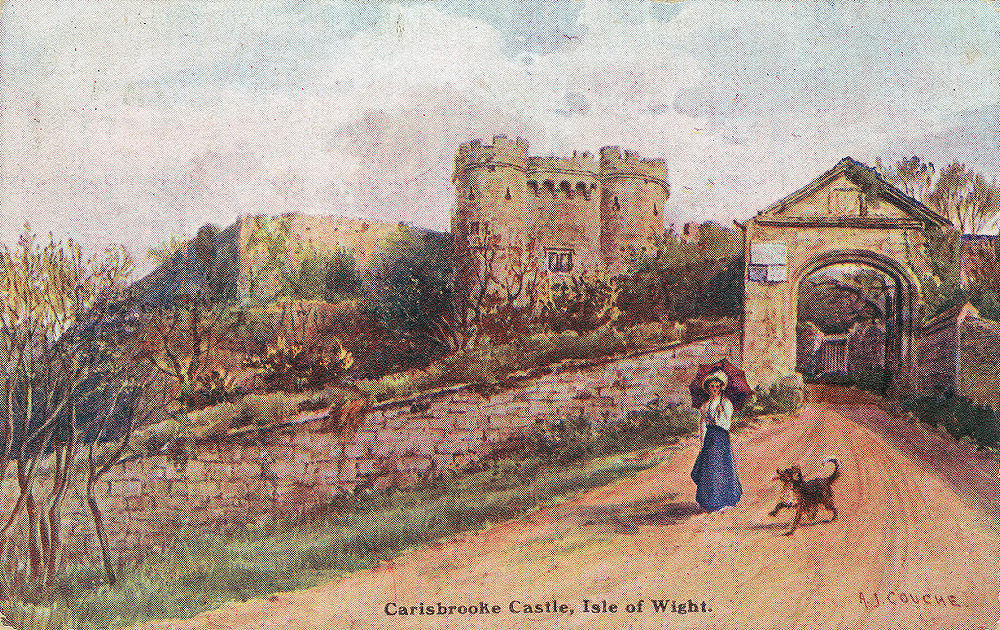
An artistic view of the entrance to Carisbrooke Castle, about 1905. (Dainty)
Carisbrooke Castle on the Isle of Wight has 7 acres of castle and earthworks. Its Norman stone walls encase a keep, a chapel and a small museum. It is one of the finest examples of a Norman Castle and was built on the site of earlier Roman and Saxon defences.
In 1377 the French landed on the northern shores, burned Yarmouth and then advanced to lay siege to Carisbrooke Castle. The castle was successfully defended after the French Commander was killed and his troops forced to pay a large amount of money for safe passage. The money was later used to rebuild Yarmouth.
The Entrance
|
|
|
|
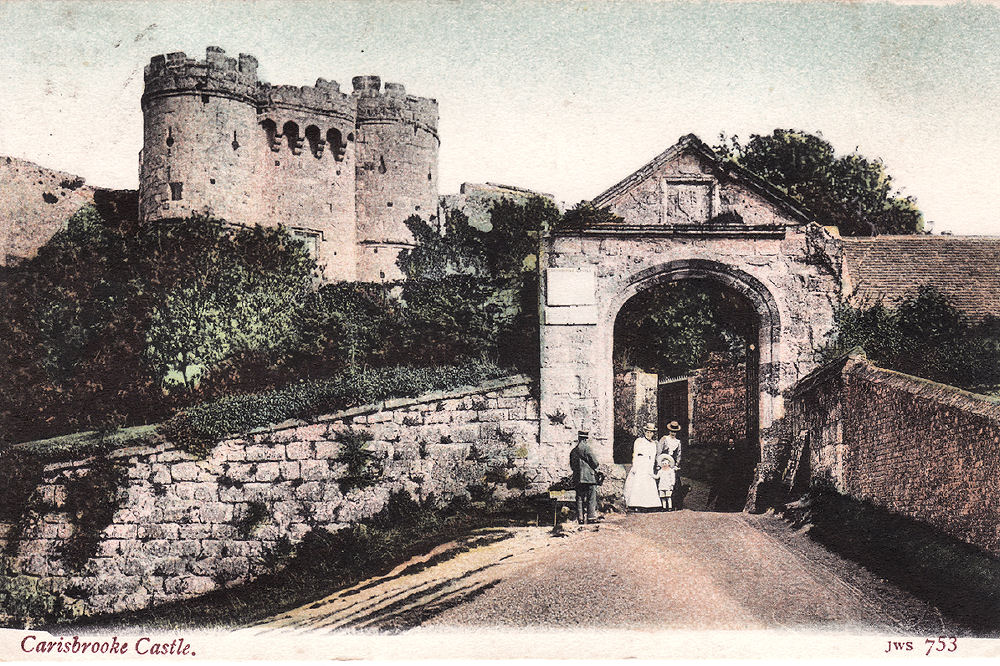
The bridge and gateway 1903. I understand the man at the gate was a rival postcard seller. (JWS) |
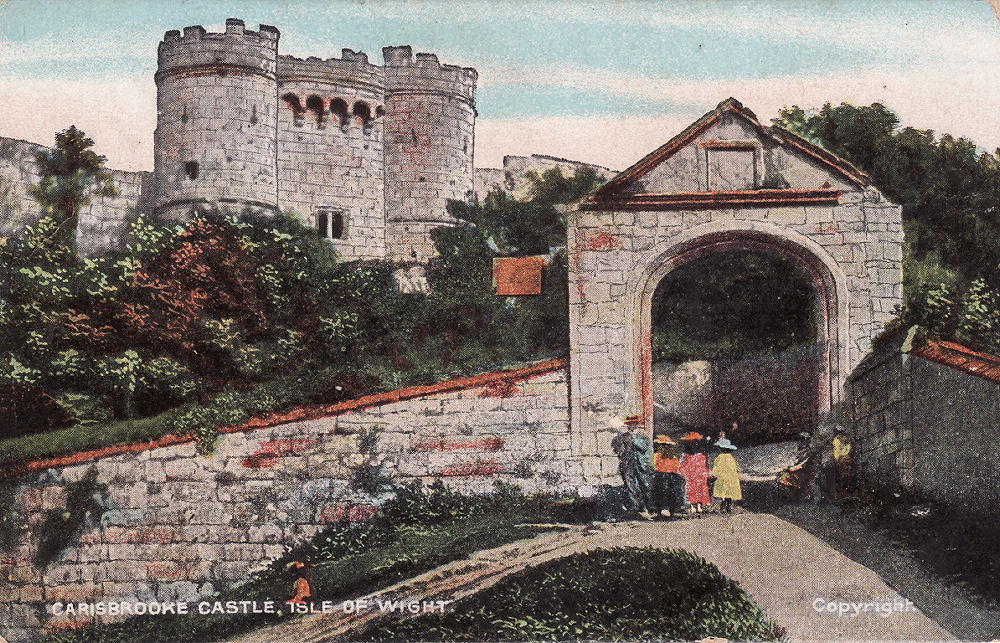
A similar view taken about 1909. |
|
|
|
|
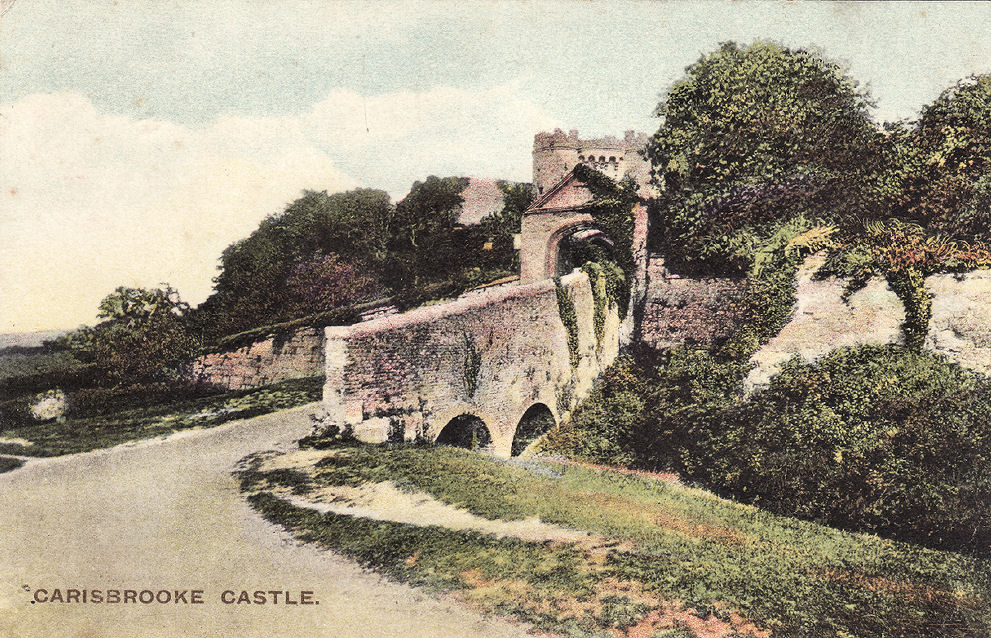
The bridge to the castle, from about 1912 |
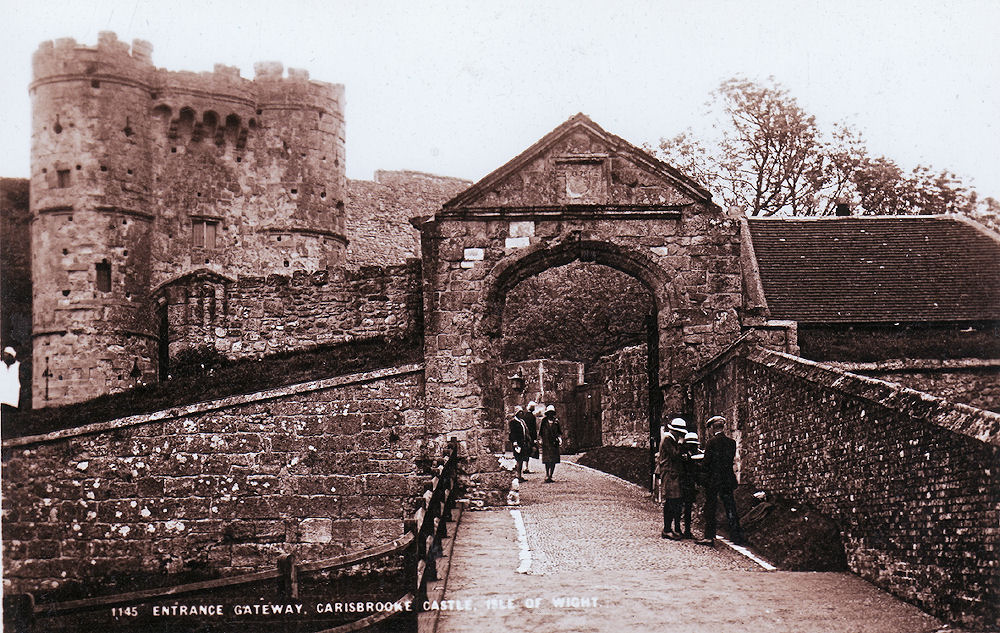
An undated, but probably from the 1920's of the Gateway. (Nigh) |
|
|
|
|
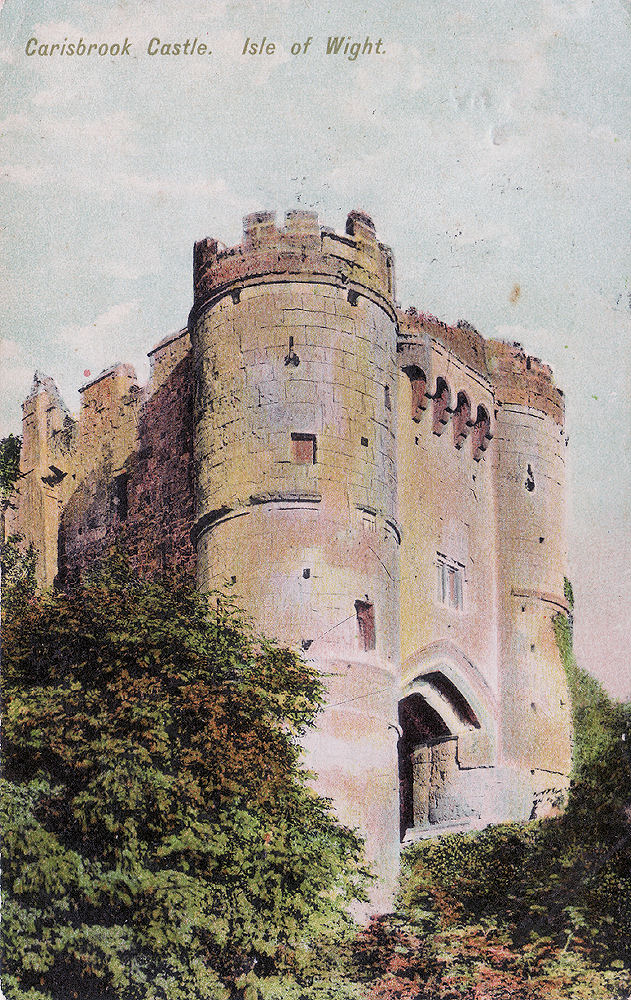
The entrance tower, 1913 |
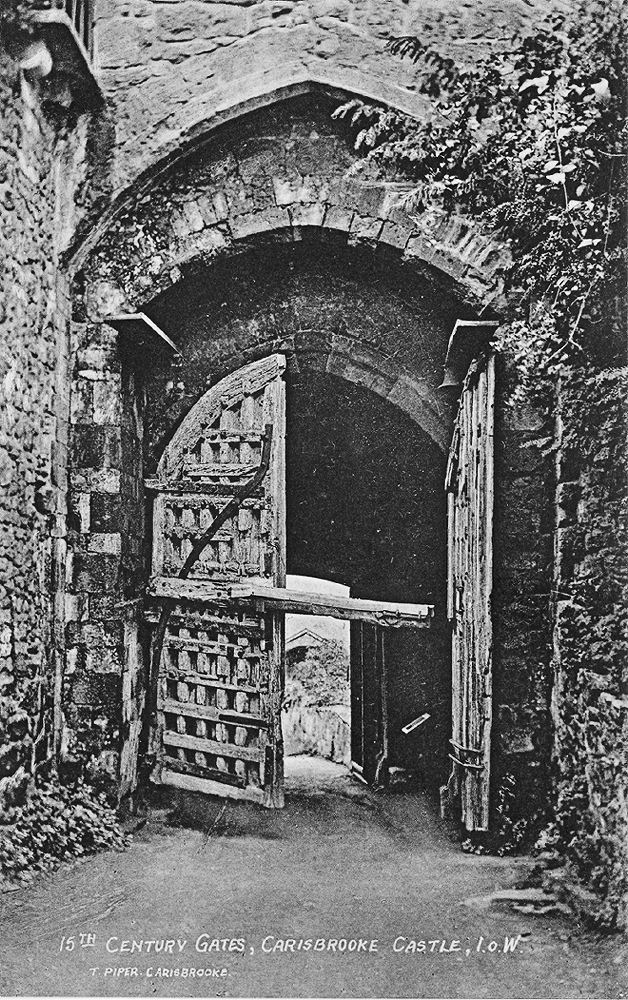
The 14th century gate, from around the same time. (Piper) |
 |
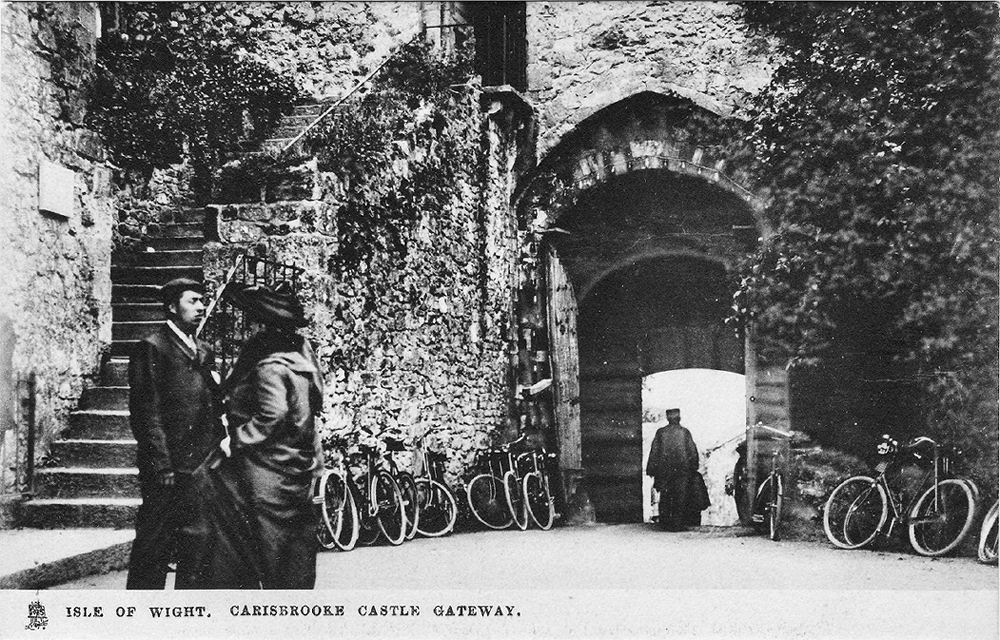 |
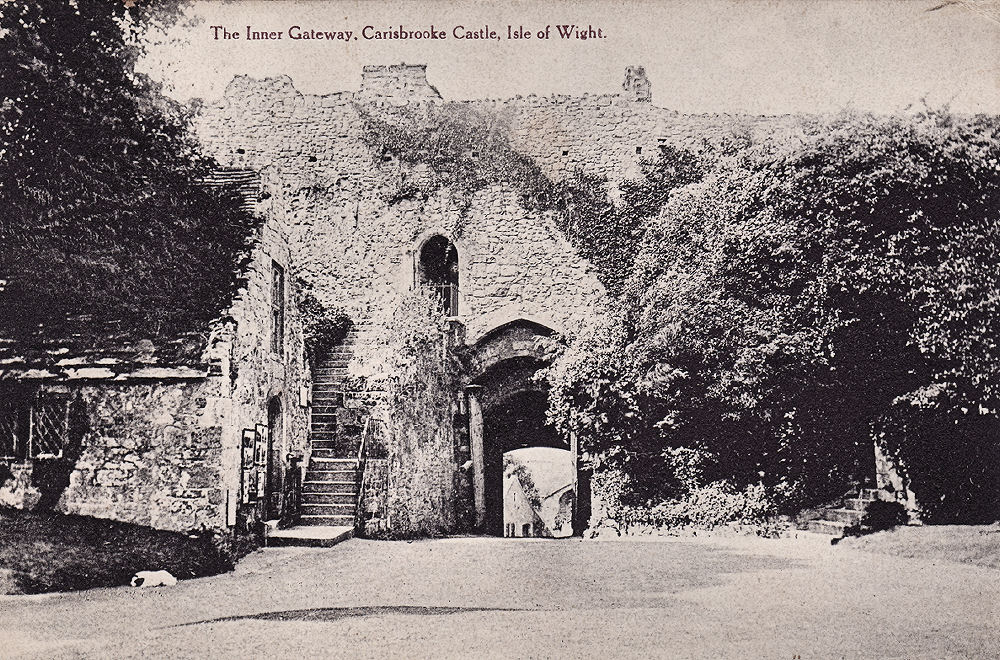
| The Inner Gateway, 1908 (Piper) | The Inner Gateway, around 1910, showing cycles of visitors. (Tuck) |
During the English Civil War, King Charles I, the second Stuart King of England, after having met with two disastrous defeats, Marston Moor and Naseby surrendered and was imprisoned near Northampton and later Hampton Court. He fled to the Island after escaping from Hampton Court Palace. He sought refuge on the Isle of Wight, where he mistakenly thought he had a friend who had been made the Governor of Carisbrooke. He was greeted as a royal guest and later He was imprisoned at Carisbrooke, from where he was returned to London for execution. He was beheaded in 1649. During his imprisonment in Carisbrooke, King Charles tried to escape many times. He also tried to smuggle coded messages to friends on the mainland to try to gain allies with the Scots against his captors.
His three escape attempts were unsuccessful and most of his secret messages were intercepted by the castle guards and fell into the hands of Cromwell.
Eventually the King was moved to Newport, then to Hurst Castle and then to London to stand trial. The register of Carisbrooke Church records:
"In the year of Our Lord God, 1649, January the 30th day, was Kinge Charles beheaded at Whitehall Gate."
Cromwell signed the death warrant. The following year two of the late King's children were taken to Carisbrooke and put in detention, where the 15 year old Princess Elizabeth caught a cold and died. The boy Prince was set free two years later and was shipped off to Holland.
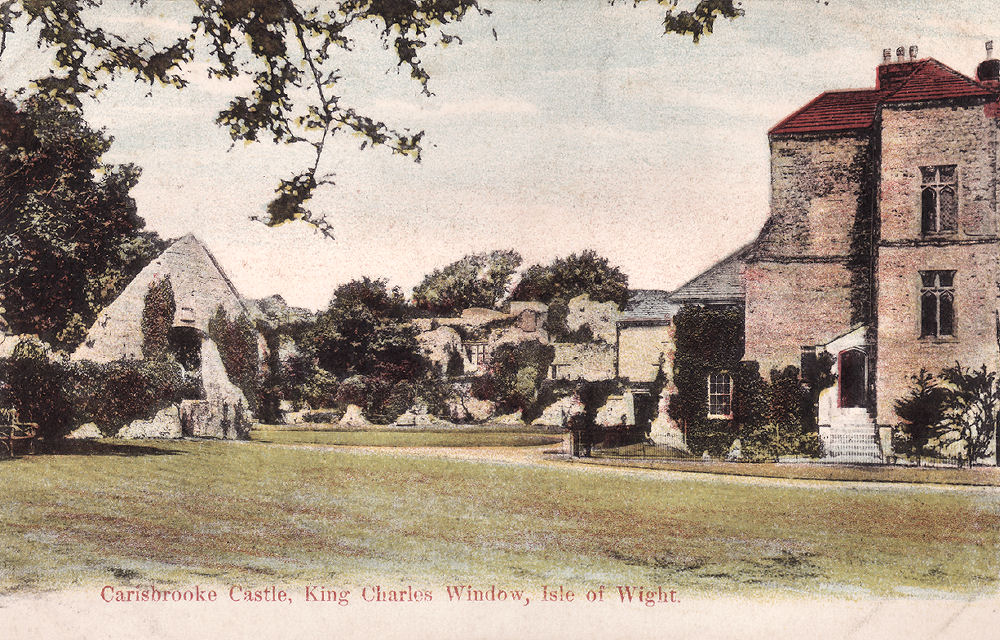
The cell King Charles was held in is now a ruin, the two cards below are from around 1910.
|
|
|
| King Charles window, visible in the centre, from about 1910. | A close up of King Charles window, from the same date. (Piper) |
|
The text for the Carisbrook Castle pages was written by my late wife, Claudette, 3 May 1947 - 7 October 2010 |
 |