 |
Carisbrooke CastleInside the castle |
Please click thumbnails for larger picture.
Old postcards are sometimes poorly produced and grainy, I've done my best to scan them.
Dates are from the card or my estimate (where possible). The maker of the card is shown in brackets (where available).
All pictures on this page are from my own collection, but are not my copyright. If you wish to repost or reuse them would you please out of courtesy let me know.
The Donkey and the well
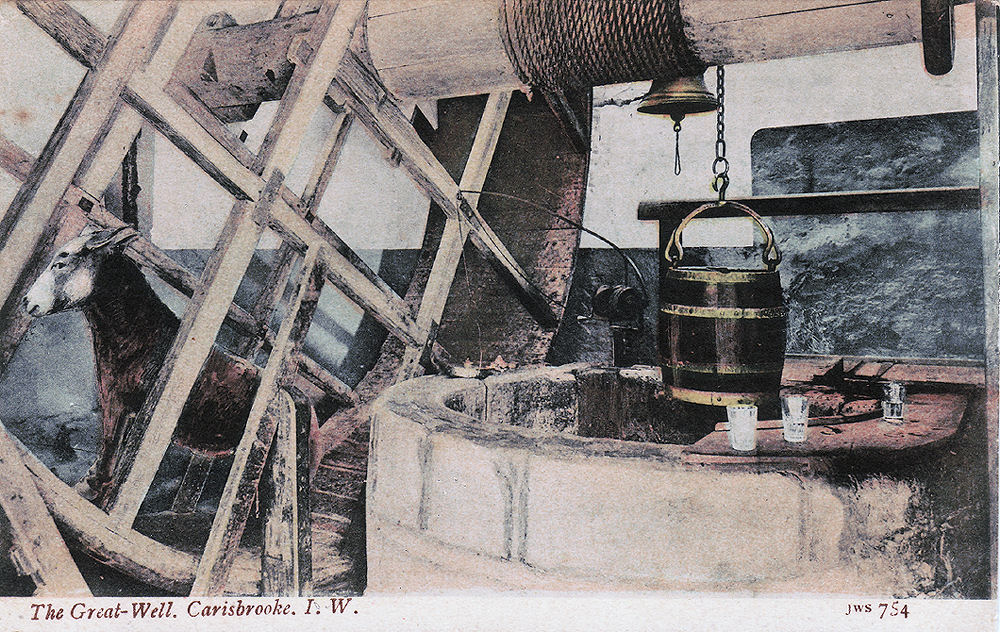
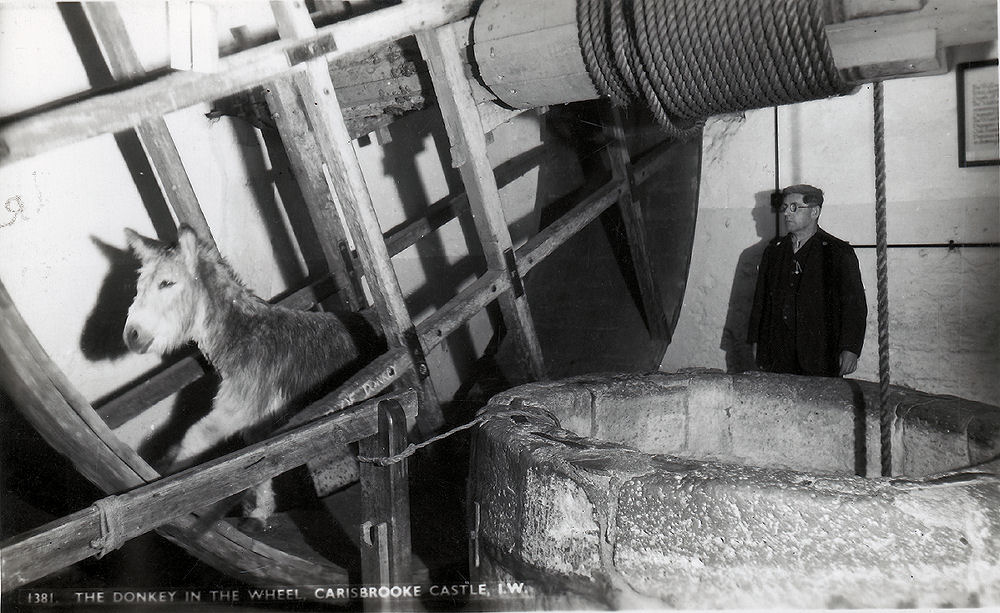
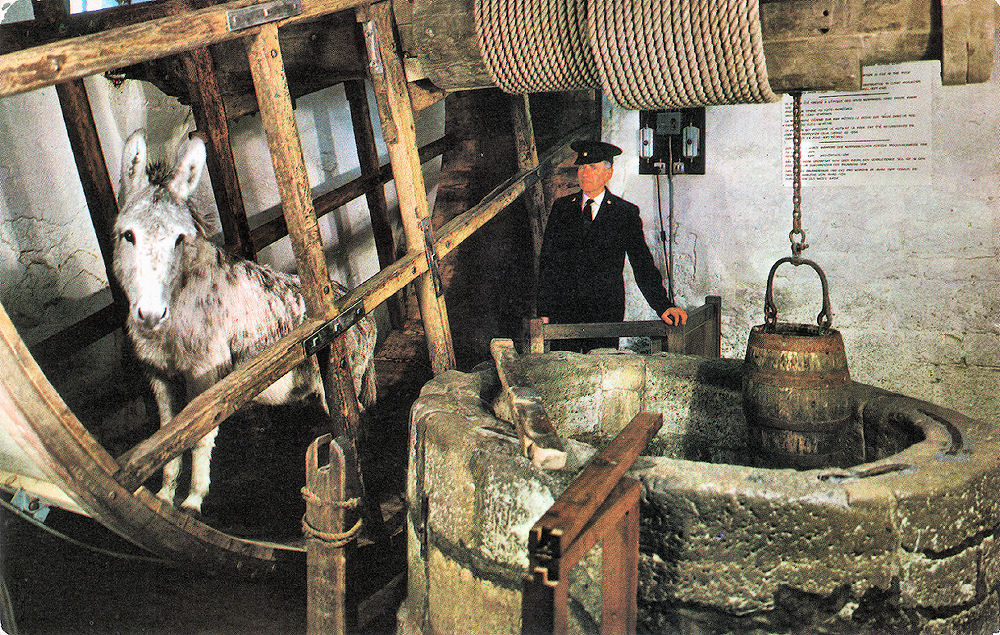
The Well House (closed between about 12.30 and 1) is a restored sixteenth-century building regarded by many people, especially juveniles, as the most interesting feature of the Castle. The well was sunk in 1150 and has a depth of 161 feet and a diameter of 5 feet 3 inches. The masonry goes down 16 feet. The depth of water varies from 15 feet to 70 feet. The average depth is 40 feet. The lowest recorded is 12 feet in 1902. The fluid is drawn up by means of an ingeniously 0contrived draw-wheel (15 feet 6 inches in diameter), to which two intelligent donkeys take turns to supply the motive power. The wheel was made in 1588. Its frame is oak; its shaft, chestnut. It is interesting to know that each time the bucket rises to the surface the patient victim of the tread-wheel has accomplished the equivalent of 300 yards. We are assured that the life suits the animals, and one is recorded to have died at the ripe old age of 50. An electric light near the bottom of the well is switched on to give an idea of the depth.
Ward
Lock Guide from the 1920's
 |
 |
|
The Well House around 1910. (LL) |
The donkey at the well, around 1910. (Welsh) |
 |
 |
|
Donkey at work at Carisbrooke during the 50's. (Nigh) |
A similar view, probably during the 1970's. (Dixon) |
 |
 |
|
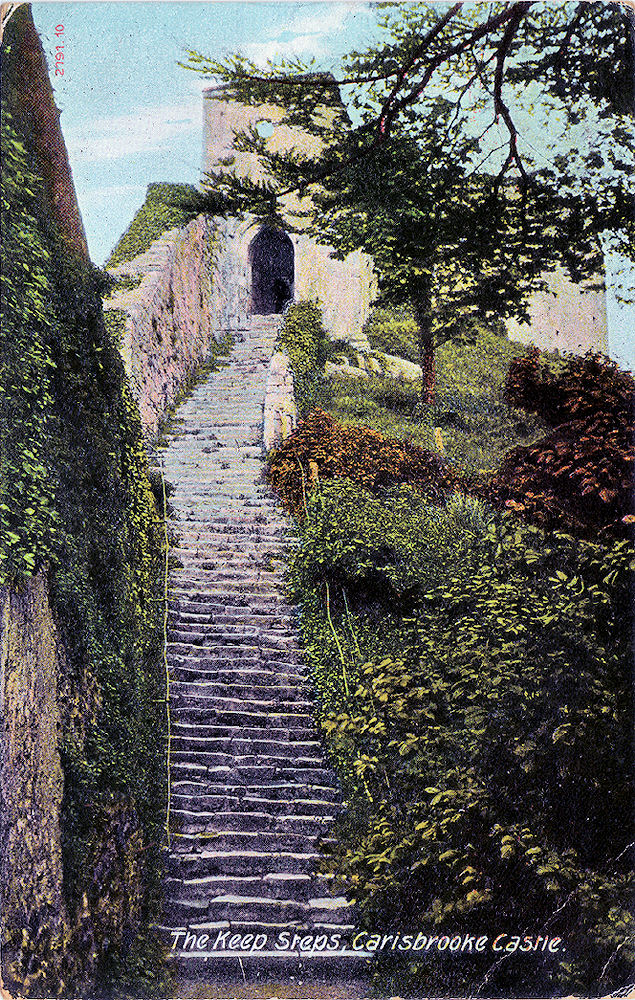
The steps to the Keep, Carisbrooke Castle 1906. |
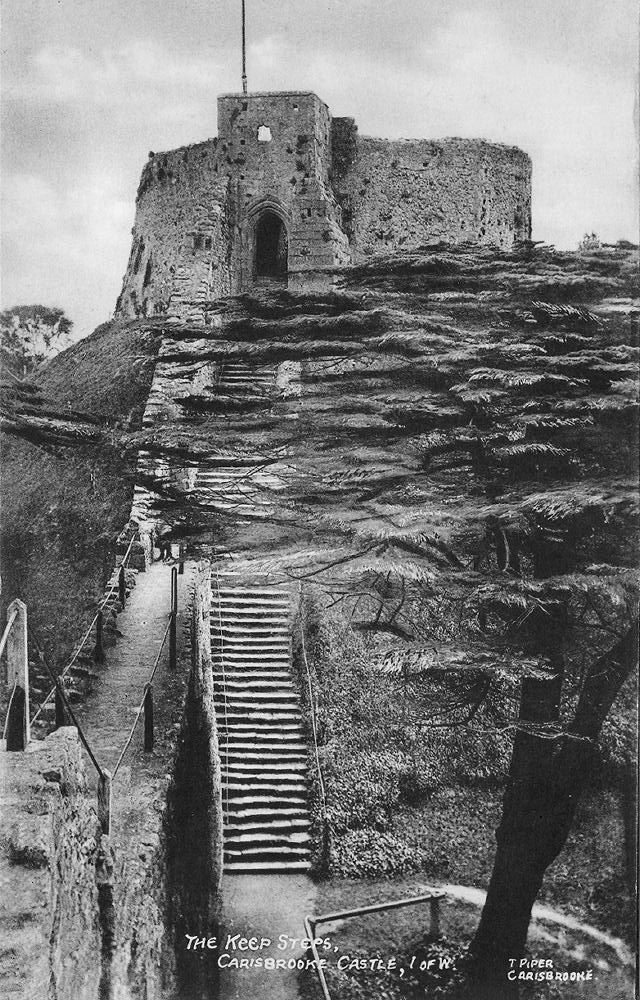
A similar view, but from lower down, about 1910. (Piper) |
 |
 |
|
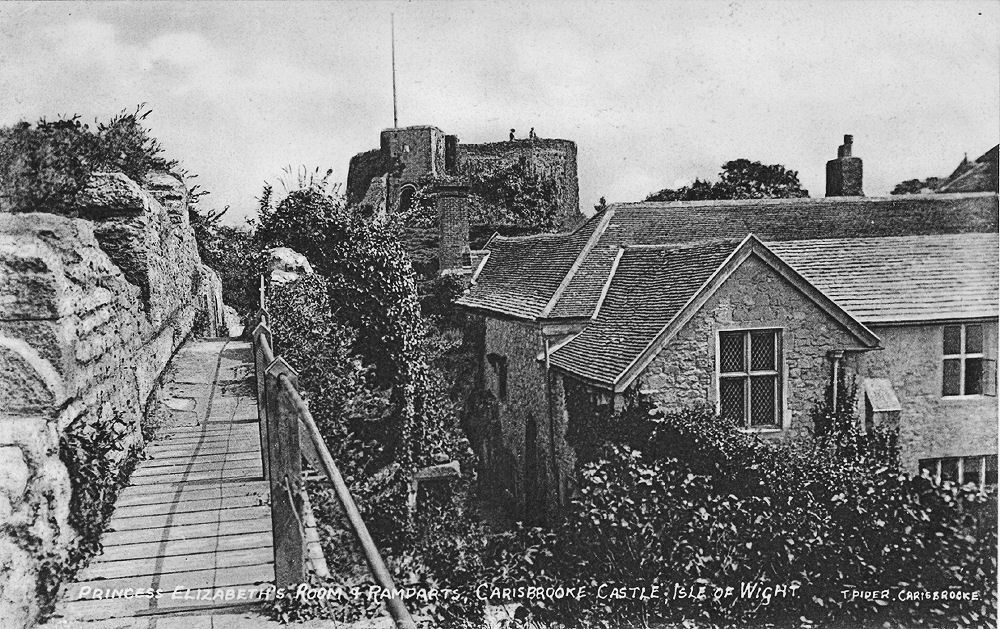
The Ramparts and Princess Elizabeth's room looking towards the keep. |
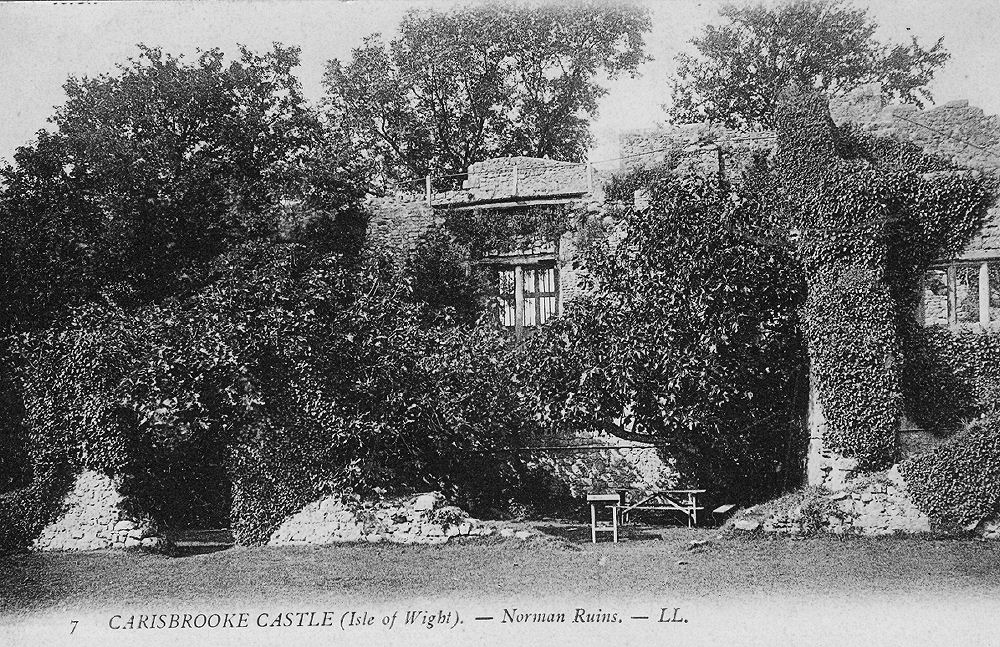
Postcard from around 1910 described as 'Carisbrooke Castle - Norman Ruins. (LL) |
 |
 |
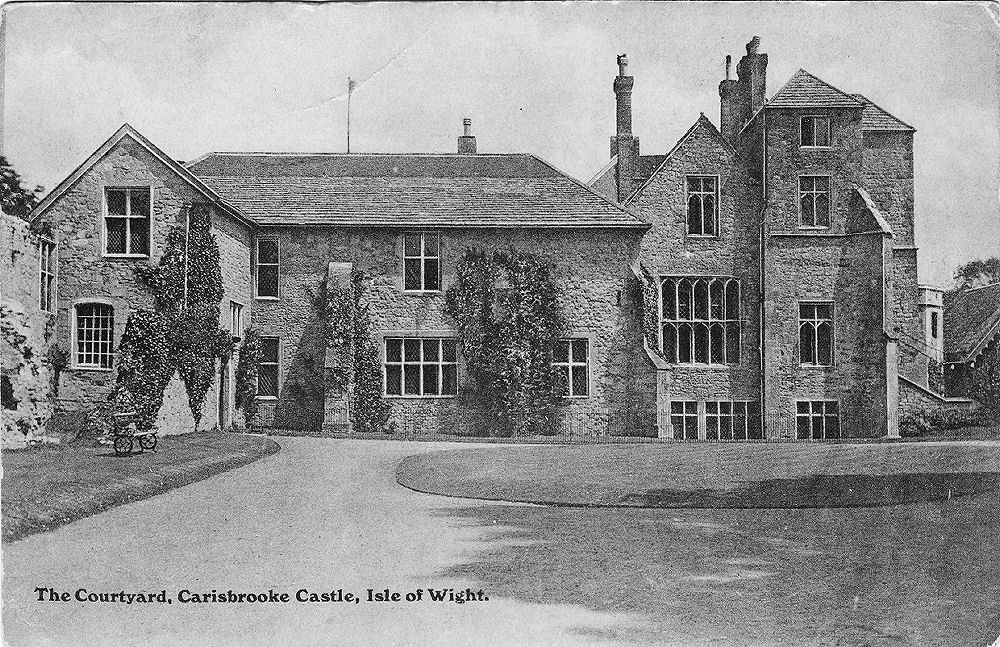
| Carisbrooke Courtyard and Governors House, around 1910. (Piper) |
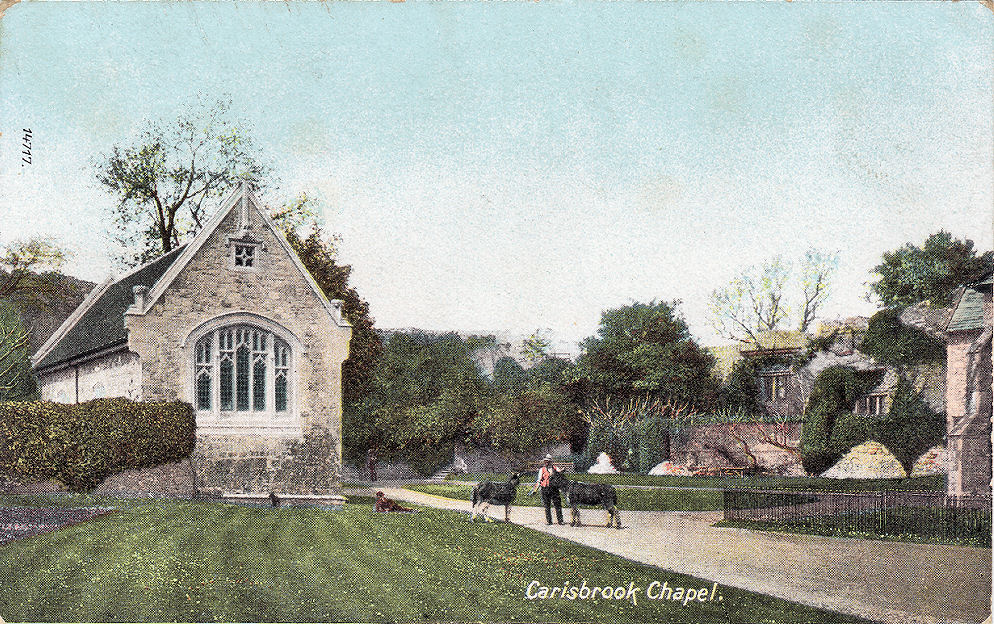
Carisbrooke Castle Chapel, St Nicholas in Castro, also showing Donkeys, from around 1910. (Wrench) |
 |
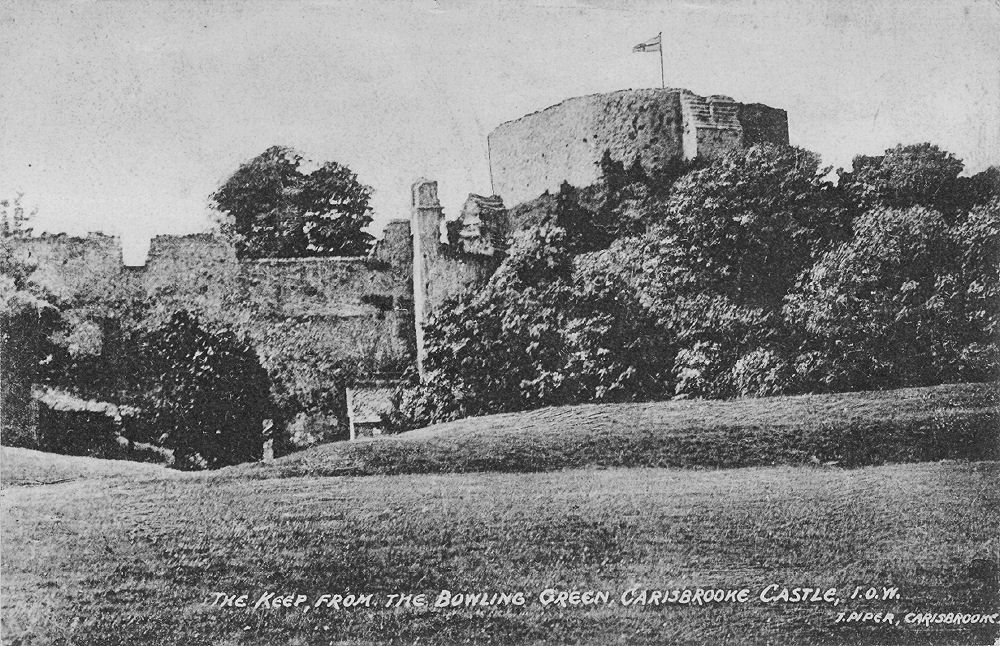 |
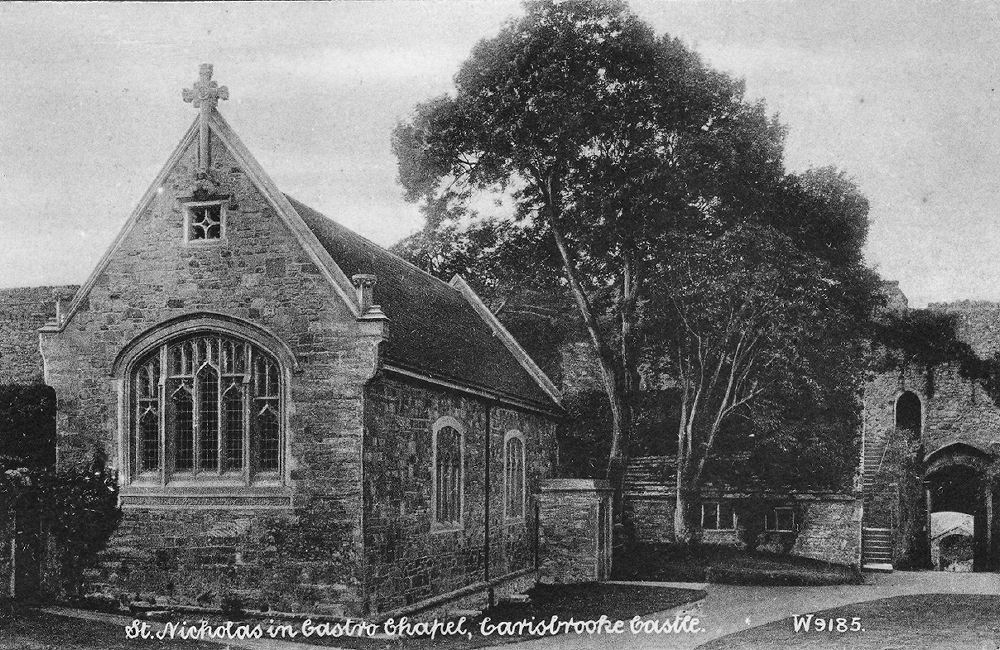
| The chapel, St Nicholas in Castro, undated but probably pre 1920. | Carisbrooke Castle keep from bowling green. (Piper) |
1 July 2013